Employees already use AI on their own
Accounts, chat history and files stay in personal tools, so the company cannot see which projects rely on AI.
Bring scattered AI work back into company projects. Stacklane-ai
A managed AI workspace for the enterprise
Projects, models, agents and files share one workspace. The business manages access, cost and audit records centrally.

Employees start from one workbench, enter a project and use models, agents, files and tools. Leadership, IT and security teams manage accounts, permissions, budgets, logs and audit records in the same platform. Existing models, knowledge bases and business systems can be connected within the agreed delivery scope, so they do not all have to be replaced at the start.
Employees usually have access to AI already. The hard part begins when scattered use makes collaboration, cost and security difficult to manage.
Accounts, chat history and files stay in personal tools, so the company cannot see which projects rely on AI.
Bring scattered AI work back into company projects.Departments buy separate accounts, APIs and models, making use, ownership and duplicate spend difficult to explain.
Manage accounts, models, usage and budgets together.Background material is spread across local files, chats and tools, so a new owner has to reconstruct the project.
Give the next person the files, history and working method.Employees upload documents, code and business data, but the company cannot tell who accessed what or which model was used.
Keep permissions, logs and audit records with the project.People doing the work need fewer handoffs and less repetition. People managing it need visibility into use, cost and risk.
How to start
There is no need to standardize every model and tool first. A pilot starts with one team, one recurring job and a clear set of acceptance criteria.
Agree on three things before the pilot: how the work is done now, what counts as acceptable, and who signs it off.
Start with a frequent task that has repeated steps, reviewable output and a business owner.
Document current time, people involved, rework, cost and quality before changing the workflow.
Configure project material, models, tools, permissions and review steps, then let the team use them for actual work.
Compare time, output, rework and quality with the baseline. Extend only the parts that held up in real use.
These are current product screens. Employees work inside projects while administrators review organizations, resources and activity.

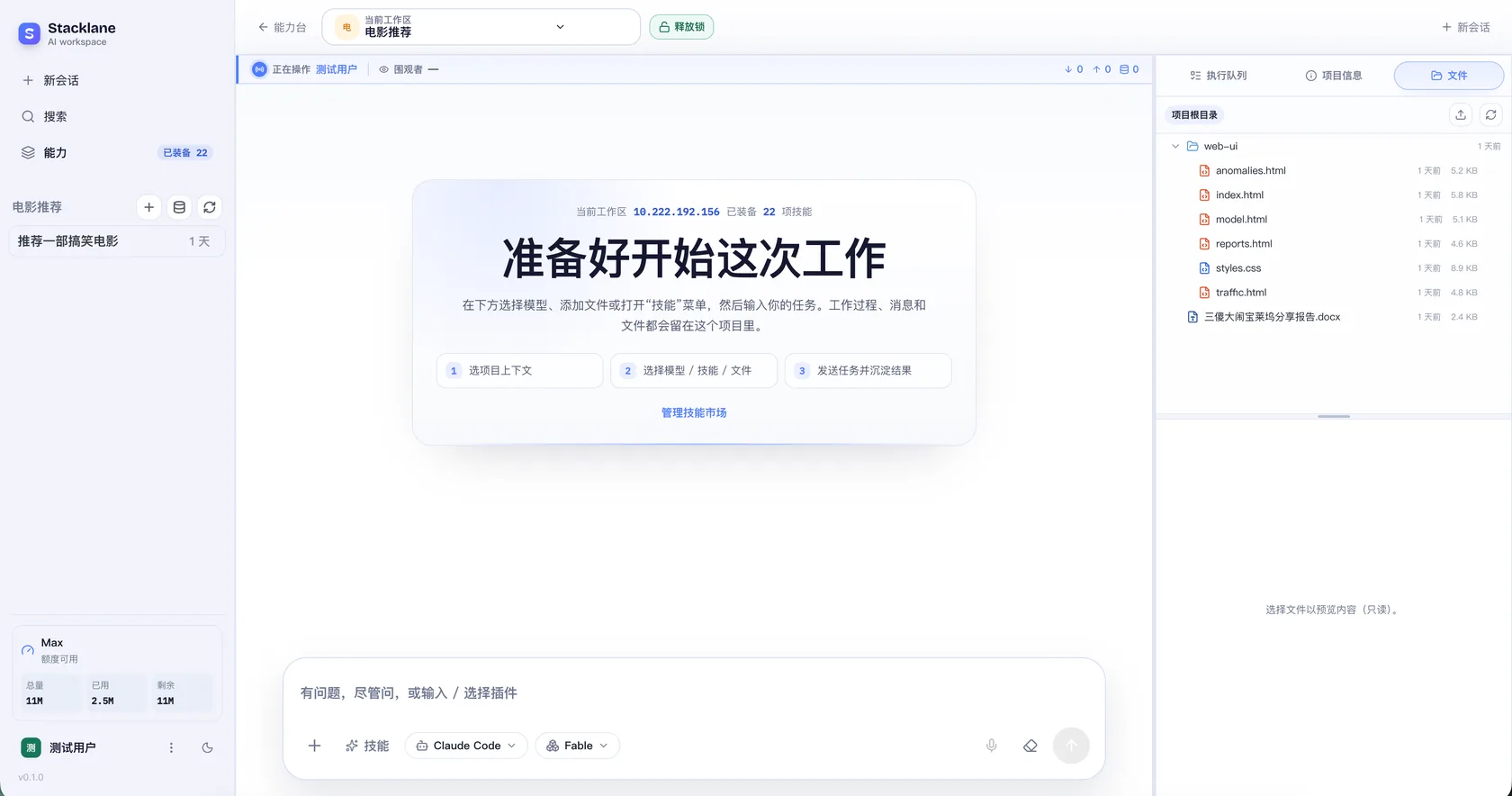
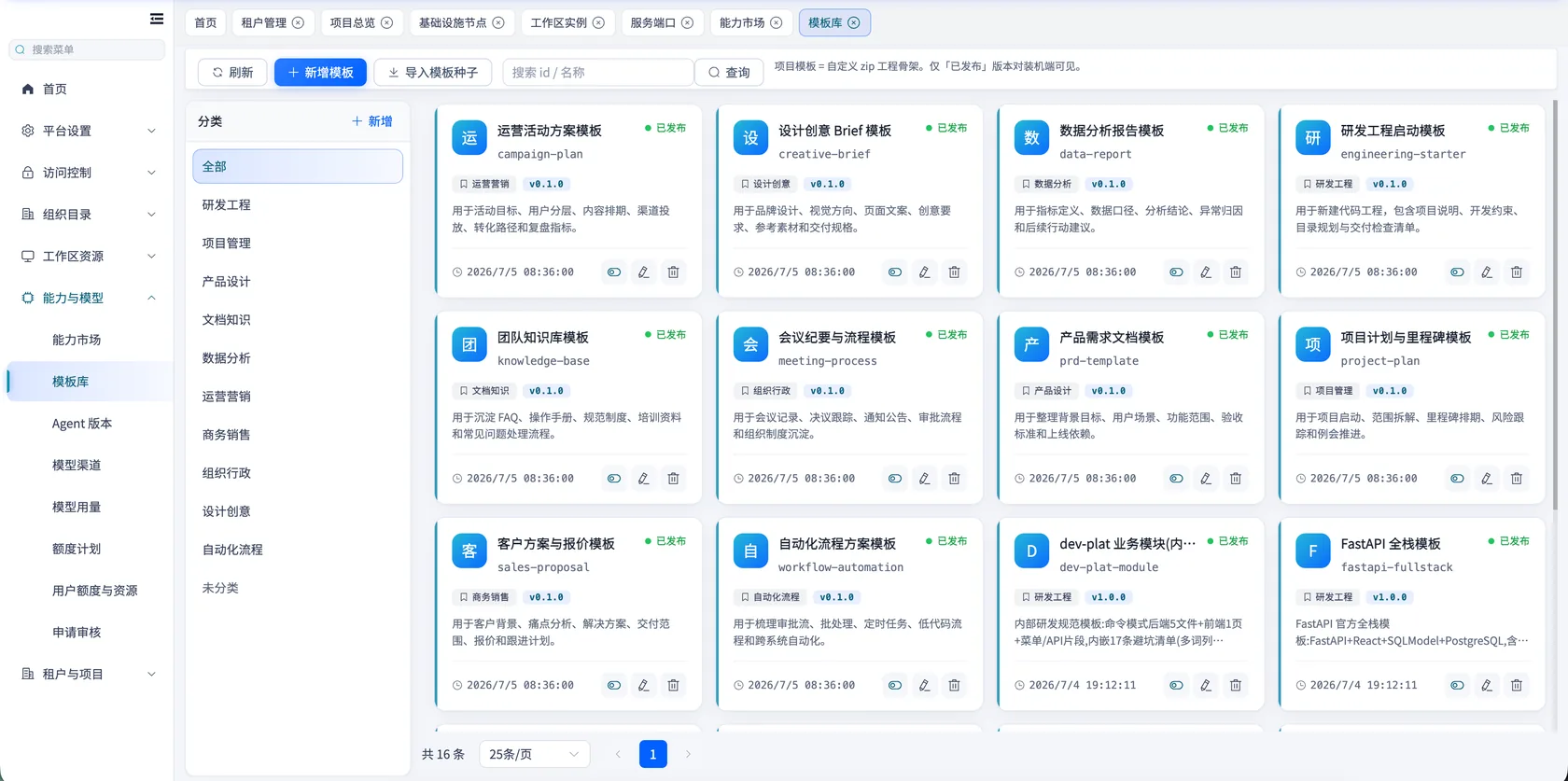
A product demo and a few good conversations are not enough.
Who can use what, what it costs, which information was accessed and whether the work can be traced after the project ends.
Users enter only the projects and capabilities assigned to them. The company configures organization, project, model and resource boundaries.
Related use and resource consumption can be reviewed by person, project, team and model for budget and procurement reviews.
The platform retains records related to projects, models and tasks as evidence for operating review and audit.
SaaS, hybrid or private deployment can be assessed against data and network requirements. Integration scope is agreed before the pilot.
Choose one team and one or two frequent workflows, then run for four to six weeks. Record the baseline first and review the result with the business owner at the end.
Tools such as ChatGPT and Cursor help individuals complete specific tasks. Stacklane-ai is organized around company projects, bringing files, context, models, agents and collaboration into one workspace with central management for accounts, access, cost, logs and audit records.
Usually not. Existing models, knowledge bases, repositories and business systems can be connected within the agreed delivery scope. The integration approach is confirmed before the pilot.
Employees enter a project and use files, models and capabilities that are already configured instead of rebuilding the environment and context for each task. The pilot shows whether the team can use it comfortably in day-to-day work.
The company can configure user, model and resource access by organization and project, review related usage and cost, and retain work records for operating review and audit. Exact boundaries depend on the company configuration and delivery scope.
We cannot promise the same gain for every role. An order-of-magnitude gain can be a pilot target for suitable high-frequency, repeatable and digital work. Actual improvement is judged against the baseline and final acceptance results.
Tell us which teams use which tools and the one issue that is hardest to manage. We will tailor the demo and suggest a sensible pilot scope.
 Scan to contact our team